
Appetite hormone regulation biotypes of major affective disorders in proinflammatory cytokines and executive function
H.-J. Wu1,2, M.-H. Chen1,2, J.-W. Hsu1,2, Y.-M. Bai1,2, W.-C. Lin1,2
1Taipei Veterans General Hospital, Psychiatry, Taipei, Taiwan, 2National Yang Ming Chiao Tung University, Psychiatry, Taipei, Taiwan
Background: Evidence indicates that appetite hormones, namely insulin, leptin, and adiponectin, play crucial roles in the pathophysiology of major affective disorders. However, whether appetite hormone regulation biotypes differ among patients with major affective disorders remains unclear.
Aims & Objectives: This study aimed to elucidate the appetite hormone regulation biotypes among patients with bipolar disorder and major depressive disorder.
Method: A total of 501 patients with major affective disorders (278 with bipolar disorder and 223 with major depressive disorder) were clustered into biotype groups on the basis of fasting insulin, leptin, and adiponectin levels. All participants underwent the Wisconsin Card Sorting Test and proinflammatory cytokine assessment.
Results: A k-means cluster analysis identified three biotype groups based on appetite hormone levels: a high insulin/leptin and low adiponectin group, a low insulin/leptin and high adiponectin group, and an intermediate group. The high insulin/leptin and low adiponectin group exhibited poorer performance on the Wisconsin Card Sorting Test and had higher C-reactive protein and tumor necrosis factor-α levels than did the other biotype groups after adjusting for diagnosis, body mass index, clinical symptoms, and psychotropic medication use.
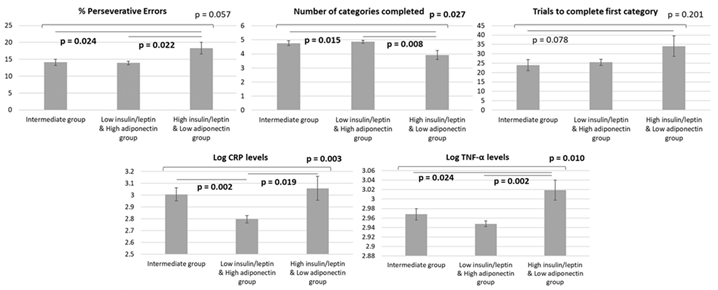
Discussion & Conclusions: This study identified three appetite hormone regulation biotypes among patients with major affective disorders. These biotypes were associated with proinflammatory cytokine profiles and executive function.
In sessions