
Gambling disorder as adverse event of dopamine agonist treatment in restless legs syndrome
M. Wolfschlag1,2, P. Odin3,4, A. Håkansson1,2
1Lund University, Clinical Addiction Research Unit, Psychiatry, Department of Clinical Sciences Lund, Faculty of Medicine, Lund, Sweden, 2Region Skåne, Malmö Addiction Center, Skåne University Hospital, Malmö, Malmö, Sweden, 3Lund University, Division of Neurology, Department of Clinical Sciences Lund, Faculty of Medicine, Lund, Sweden, 4Region Skåne, Section of Neurology, Department of Neurology, Rehabilitation Medicine, Memory and Geriatrics, Skåne University Hospital, Malmö, Sweden
Background: Reduced impulse control manifesting as gambling disorder (GD) is a known adverse event of dopamine agonist treatment in Parkinson’s disease (PD), often associated with high D2/3 receptor affinity. The same agents are widely prescribed to patients with restless legs syndrome (RLS), a neurological disorder much more prevalent than PD. Despite RLS patients constituting the major patient group at risk for iatrogenic GD, they have received little attention in research.
Aims & Objectives: Our goal is to create an epidemiological overview over GD as an adverse event for RLS patients under dopamine agonist treatment in the total Swedish population. We want to identify high-risk treatments, vulnerable patient groups, and explore a possible dose effect.
Method: This retrospective cohort study is based on the Swedish National Patient Registries and the Prescribed Drug Register and includes all patients in Sweden with a dopaminergic prescription for RLS symptoms between 2005 and 2022 (n=145,913). GD predictors are identified by multivariate logistic regression and individual cases of RLS patients developing GD are followed by mapping individual treatment timelines.
Results: During the inclusion process for RLS patient records, the full population of patients with antiparkinsonian dopaminergic prescriptions, regardless the indication, was screened (n=251,965). We could show that RLS patients constitute the major patient group treated with dopaminergic medication in Sweden (58%, Fig.1), and that the distribution of underlying neurological disorders was similar in patients developing GD, indicating similar GD prevalences in RLS and PD (Fig.1).
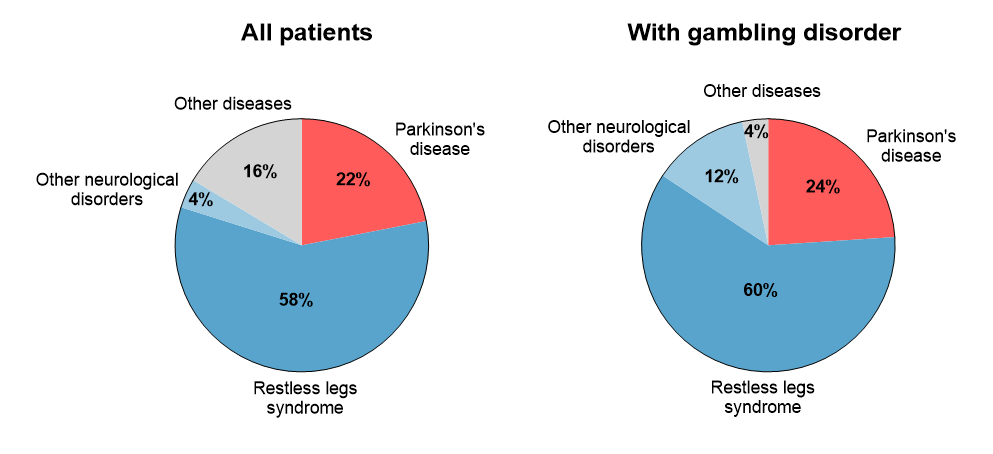 Figure 1. Frequencies of underlying diagnoses for patients under antiparkinsonian, dopaminergic treatment.
In contrast to the vast majority of GD patients in the general population being male, 53% of RLS patients with GD were female. Younger age was a GD risk factor, in line with findings in PD patients. Individual treatment timelines raise the concern that in RLS patients, the dopamine agonist therapy is only rarely adapted after a GD emerges.
In contrast to the vast majority of GD patients in the general population being male, 53% of RLS patients with GD were female. Younger age was a GD risk factor, in line with findings in PD patients. Individual treatment timelines raise the concern that in RLS patients, the dopamine agonist therapy is only rarely adapted after a GD emerges.
Discussion & Conclusions: Our preliminary results point towards an urgent need for studying dopamine agonist-induced GD in the large, under-recognised group of RLS patients. With untypically many females affected, clinical presentations might differ from PD patients with GD, for example characterised by more severe psychiatric comorbidity.
In sessions