
Physical hospitalization burden is lower in severe schizophrenia: evidence of potential barriers to medical care
B.C. Lee1, K.S. Oh2
1Hallym University, Psychiatry, Seoul, Korea, Republic of, 2Kangbuk Samsung Hospital, Psychiatry, Seoul, Korea, Republic of
Background:
Physical comorbidities are common in schizophrenia, and the healthcare burden associated with non-psychiatric conditions is an important consideration for insurance coverage and patient support.
Aims & Objectives: This study compared hospitalization days for psychiatric and physical conditions before and after the initial diagnosis of schizophrenia in adults younger than 60 years, with particular focus on distinguishing patients with presumed severe illness who required long-acting injectable antipsychotics (LAIs).
Method:
Using the Korean National Health Insurance claims database (HIRA), we identified individuals under 60 years of age who received a first recorded primary diagnosis of schizophrenia in 2019 and who had no schizophrenia-related primary diagnosis during the preceding three years. For each patient, hospitalization days for all recorded diagnoses were aggregated for the five years before and after diagnosis and normalized by the number of hospitalized patients. Psychiatric and physical conditions were analyzed separately in LAI users and non-users.
Results: Both LAI and non-LAI groups showed increasing hospitalizations for other major psychiatric disorders even before the formal schizophrenia diagnosis, indicating substantial pre-diagnostic psychiatric morbidity among younger adults. After diagnosis, schizophrenia-related hospitalization days increased sharply in the LAI group, consistent with greater illness severity. In contrast, hospitalization days for physical conditions were higher in the non-LAI group, whereas LAI users showed comparatively limited inpatient use for medical conditions.
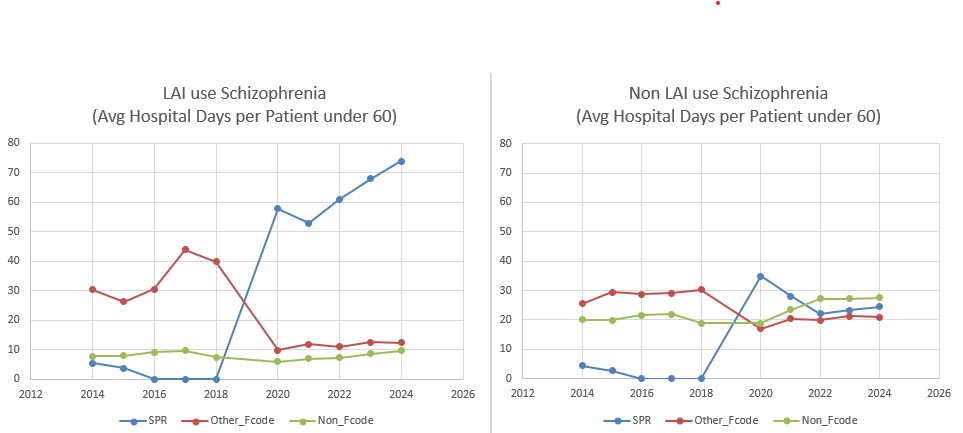
Discussion & Conclusions: Frequent psychiatric hospitalizations prior to diagnostic confirmation may contribute to the relatively older age at which schizophrenia is first formally recorded in South Korea, even among individuals under 60 with no recent schizophrenia diagnosis. The lower medical hospitalization in LAI users may reflect barriers to accessing physical healthcare rather than reduced medical need. These findings highlight the need for proactive identification and management of physical illnesses in younger patients with severe schizophrenia.
In sessions