
Plasma interleukin-6 levels in antipsychotic-responsive and treatment-resistant schizophrenia in association with clozapine treatment
Y. Suzuki1, K. Endo2, S. Yokokawa2, K. Watanabe3, K. Kanno-Nozaki1, Y. Kobayashi1, M. Ichinose4,1, S. Horikoshi5,1, I. Miura1
1Fukushima Medical University, School of Medicine, Department of Neuropsychiatry, Fukushima, Japan, 2Fukushima Medical University, School of Medicine, Fukushima, Japan, 3Fukushima Medical University Hospital, Department of Pharmacy, Fukushima, Japan, 4Hoshigaoka Hospital, Department of Neuropsychiatry, Koriyama, Japan, 5Horikoshi Psychosomatic Clinic, Fukushima, Japan
Background: Neuroinflammation has been proposed as a key pathophysiological mechanism underlying treatment-resistant schizophrenia (TRS). Interleukin-6 (IL-6) has been reported as a trait-related inflammatory marker in schizophrenia; however, data focusing specifically on TRS and the impact of clozapine treatment remain limited.
Aims & Objectives: The aim of the present study was to investigate differences in plasma IL-6 levels between TRS and antipsychotic-responsive schizophrenia (AR). Specifically, we aimed to clarify the associations between plasma IL-6 levels and clinical symptoms, cognitive function, and clozapine treatment in TRS.
Method: We conducted a multicenter cross-sectional study including patients with TRS and AR. Plasma IL-6 levels were measured and compared between the two groups. Cognitive function and clinical variables were assessed, and factors associated with plasma IL-6 levels were examined within the TRS group.
Results: A total of 62 patients (37 patients with TRS and 25 with AR) were included. Plasma IL-6 levels were significantly higher in TRS than in AR (p < 0.001). Within the TRS group, plasma IL-6 levels were negatively associated with the duration of clozapine treatment (r = −0.348, p < 0.05; Figure1).
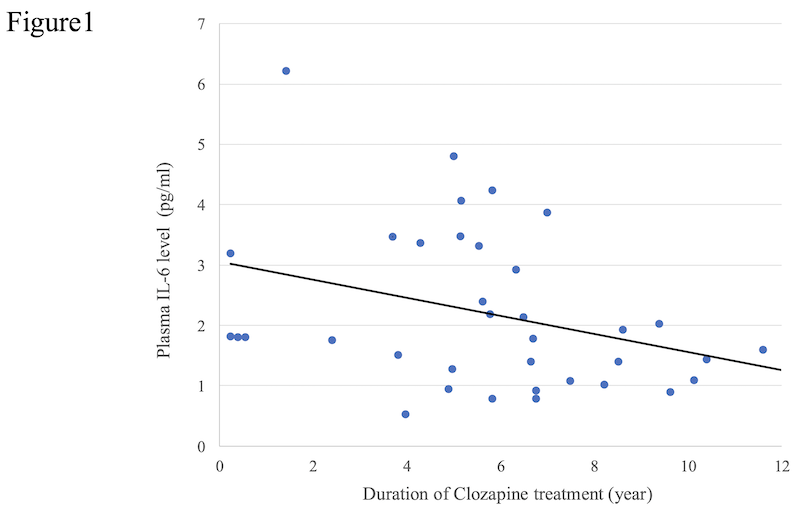
This association remained significant after adjustment for age in multiple regression analysis (β = −0.435, p = 0.007). No significant associations were observed between plasma IL-6 levels and symptom severity or cognitive function within the TRS group.
This association remained significant after adjustment for age in multiple regression analysis (β = −0.435, p = 0.007). No significant associations were observed between plasma IL-6 levels and symptom severity or cognitive function within the TRS group.
Discussion & Conclusions: These findings support the concept that TRS represents a biologically distinct subtype of schizophrenia characterized by inflammatory dysregulation. Moreover, longer-term clozapine treatment may exert anti-inflammatory effects in TRS, highlighting a potential immunomodulatory role of clozapine beyond symptom control. Further longitudinal studies are warranted to clarify the causal relationship between clozapine treatment and inflammatory processes.
In sessions